

TL;DR
- Employment law has two completely different client audiences: employees suing employers, and employers defending against claims
- The keywords, channels, ad copy, and messaging for each side are entirely different
- Plaintiff-side marketing looks like personal injury marketing: emotional, urgent, contingency-focused
- Defense-side marketing looks like B2B marketing: relationship-driven, LinkedIn-heavy, trust-first
- Most employment law marketing advice ignores this split entirely, which is why most of it doesn’t work
Most guides on employment law marketing treat it as a single category. They’ll tell you to “build a strong online presence” and “optimize your Google Business Profile” and leave it at that.
That’s not wrong. It’s just incomplete in a way that makes it almost useless.
Employment law is not one market. It’s two. And if you’re running the same marketing strategy for both sides of the practice, you’re leaving cases on the table regardless of which side you represent.
This post breaks down employment attorney marketing by audience, because the strategies, keywords, channels, and messaging are different enough that they need to be treated separately.
Why Employment Law Marketing Is Different
Most practice areas have one audience type. A personal injury firm is always marketing to injured people. A criminal defense firm is always marketing to people who’ve been arrested or are about to be.
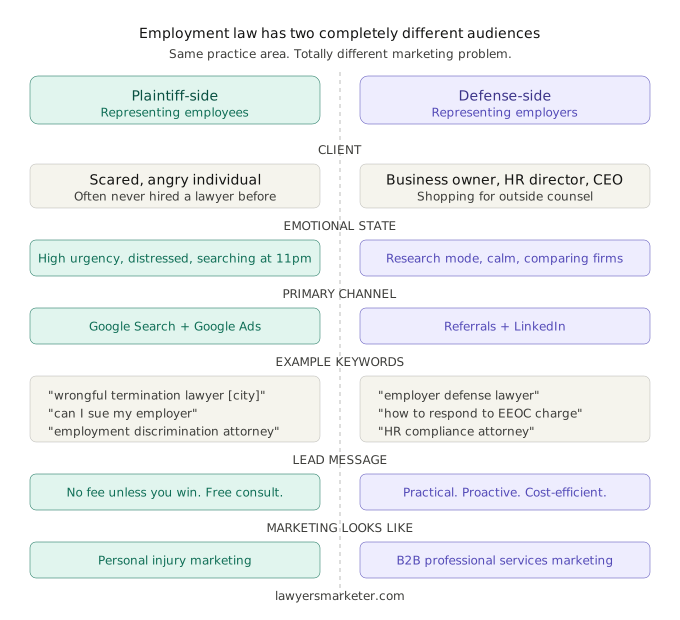
Employment law is the exception. The same legal subject matter generates two entirely distinct client types who are searching for attorneys in completely different ways, on completely different platforms, with completely different emotional states.
A fired employee searching “wrongful termination lawyer” is scared, angry, and probably Googling at 11pm. They want to know if they have a case and whether they can afford to find out.
An HR director searching for outside employment counsel to handle a discrimination claim filed against their company is doing business research. They’re comparing firms, checking credentials, and probably asking their CEO for a referral.
Same practice area. Completely different marketing problem.
This is the split that most employment law marketing content ignores, and it’s the reason generic advice falls flat. Let’s go through each side.
Part 1: Plaintiff-Side Employment Law Marketing (Representing Employees)
Who You’re Marketing To
Plaintiff-side employment attorneys represent workers. Wrongful termination. Wage and hour violations. Sexual harassment. Discrimination based on race, gender, age, or disability. Retaliation claims. FMLA violations.
Your potential clients are employees, and most of them have never hired an attorney before. They don’t know if they have a case. They don’t know how contingency fees work. And they are in some level of emotional distress when they start searching.
This matters for every marketing decision you make.
The Right Keywords for Plaintiff-Side Employment Law
Plaintiff-side employment law searches are almost always problem-aware. People know something bad happened. They’re looking for confirmation and next steps.
High-intent keywords to target:
- wrongful termination lawyer [city]
- can I sue my employer for firing me
- employment discrimination attorney near me
- hostile work environment lawyer
- wage theft attorney [city]
- FMLA retaliation lawyer
- sexual harassment attorney [city]
- unpaid overtime lawyer
- how to file an EEOC claim
- employment lawyer free consultation
Notice how many of these are question-based or problem-specific. Your content strategy should match that pattern. A blog post titled “Can I Sue My Employer for Wrongful Termination in [State]?” will outperform “Employment Law Services” every time because it matches how people actually search when they’re in this situation.
Long-tail keyword opportunity: wage and hour claims are one of the most searched subcategories in plaintiff-side employment law. If you handle FLSA cases, “unpaid overtime lawyer” and “wage theft attorney” are worth targeting specifically rather than trying to rank for the broad “employment attorney” term.
Where Plaintiff-Side Clients Come From
Google Search (Organic and Paid)
This is your primary channel. Plaintiff-side employment clients search Google when something goes wrong. They want an answer fast, and they want to know someone can help them. Local SEO is critical here. Your Google Business Profile needs to be fully built out with your specific practice areas listed, not just “employment law.” “Wrongful termination attorney” and “discrimination lawyer” as service categories will outperform generic descriptions.
Our law firm SEO services page covers how we approach local search for attorneys, but the short version for employment firms is: your GBP categories and your on-site content need to be specific to the claim types you handle, not just the broad practice area.
Google Ads
Paid search works for plaintiff-side employment law, but the economics are different than personal injury. CPCs are lower than PI, which means the math can work well even on tighter budgets. The key is to target high-intent, problem-specific keywords and send traffic to landing pages that address that specific problem, not your firm homepage.
A landing page for “wrongful termination attorney” should speak directly to someone who just got fired, explain how contingency fees work, and make the free consultation offer prominent. Our law firm PPC services page goes into more detail on campaign structure, but the principle is the same as any legal paid search: match the ad to the landing page to the client’s specific situation.
Social Media (Targeted, Not Broadcast)
Plaintiff-side employment clients respond to Facebook and Instagram ads because those platforms are good at finding people based on life events and behavior. Someone who recently changed jobs, was recently laid off, or is part of employment-related groups can be targeted. This is not a primary channel, but it works as a supplement, especially for wage and hour campaigns where you’re trying to reach hourly workers in specific industries.
Intake and Speed
One thing that kills plaintiff-side employment law marketing that nobody talks about: intake speed. These potential clients are often stressed, sometimes embarrassed, and almost always comparing multiple attorneys at once. If your intake process requires a callback the next business day, you’re losing cases to whoever calls them back in the next 20 minutes.
Messaging That Works for Plaintiff-Side Clients
Your messaging needs to do three things quickly:
- Validate that what happened to them might be actionable
- Remove the financial risk concern (contingency means no fee unless you win)
- Make the next step feel easy and low-pressure
What not to do: lead with firm credentials, years in practice, or litigation philosophy. Nobody searching “can I sue my employer” is ready to hear about your track record in front of the NLRB. Lead with empathy and clarity. Credentials follow.
Part 2: Defense-Side Employment Law Marketing (Representing Employers)
Who You’re Marketing To
Defense-side employment attorneys represent businesses: small employers, mid-market companies, HR departments, and corporations defending against claims filed by current or former employees. They also do proactive work: handbook reviews, manager training, separation agreements, and advising on RIFs.
This is fundamentally a B2B marketing problem. Your clients are businesses, not individuals in distress. And B2B legal marketing works very differently from consumer legal marketing.
The Right Keywords for Defense-Side Employment Law
Defense-side searches tend to be more research-oriented and less urgent, with some exceptions (a company that just received an EEOC charge will search with urgency).
Keywords worth targeting:
- employment defense attorney [city]
- employer defense lawyer
- EEOC defense attorney
- wrongful termination defense lawyer
- employment law counsel for employers
- HR compliance attorney
- employment practices liability
- how to respond to EEOC charge
- employment attorney for small business
- labor and employment law firm for employers
Notice the difference in search intent here. “How to respond to EEOC charge” is someone who just got served and needs guidance now. “HR compliance attorney” is someone doing proactive research. Both are worth targeting with different content, but they require different landing pages and different calls to action.
The proactive searches are where you can build significant SEO value. An employer who finds your blog post on EEOC charge response procedures before they need you is far more likely to call you when they do.
Where Defense-Side Clients Come From
Referrals First
Let’s be direct about this: referrals drive the majority of defense-side employment engagements. In-house counsel refers outside counsel to colleagues. Business attorneys refer their clients to employment defense lawyers. HR consultants have preferred attorney relationships. CPAs who handle payroll clients often have employment attorney referrals.
This means your marketing strategy needs a referral development component that most generic “employment law marketing” guides don’t address. Building relationships with business attorneys, CPAs, HR consultants, and commercial bankers in your market is not optional for a defense-side practice. It’s the core channel.
Referral development activities that actually produce cases:
- Lunch and learns for HR departments on recent employment law changes
- Continuing education presentations for CPAs and business advisors
- Co-authoring content with business attorneys in complementary practice areas
- Sponsoring SHRM chapter events and HR professional associations
For defense-side employment law, LinkedIn is not optional. HR directors, CEOs, and in-house counsel are on LinkedIn. They read legal content there. They check attorney credentials there. And they respond to thought leadership from attorneys who demonstrate genuine knowledge of the employer-side challenges they face.
Content that performs well on LinkedIn for defense-side employment attorneys:
- Practical breakdowns of recent employment law changes (state-specific is even better)
- “What to do if an employee files an EEOC charge” type explainers
- Commentary on significant court decisions affecting employers
- HR policy guidance that saves employers from common mistakes
This content positions you as the attorney they want before something goes wrong, not just after.
Google Ads and SEO (Yes, Still)
Organic and paid search still matter for defense-side, especially for the urgent searches. An employer who just received an EEOC charge or got served with a discrimination lawsuit is searching Google. You want to be there.
The difference from plaintiff-side is that your landing pages and ad copy need to speak to an employer audience, not an individual. Language matters. “We protect businesses from employment claims” reads differently than “We fight for your rights as an employer,” and both read differently than plaintiff-side messaging. Get this wrong and you’ll have plaintiff-side prospects calling a defense firm, which wastes everyone’s time.
Speaking and Publishing
Defense-side employment attorneys benefit enormously from visible expertise. Writing bylined articles for business journals, speaking at chamber of commerce events, contributing to HR trade publications, and appearing on business podcasts all build the type of authority that generates referrals and direct inbound inquiries from employer clients.
This is a longer-term play but it compounds. An article you wrote three years ago on arbitration agreements is still generating calls if it’s on a well-trafficked business publication website.
Messaging That Works for Defense-Side Clients
Defense-side clients want to see:
- That you understand their business operations, not just the law
- That you’re proactive, not just reactive
- That you can help them avoid problems before they happen, not just litigate when they do
- That you understand cost and efficiency (they have a business to run)
Lead with business outcomes, not legal credentials. “We help employers in [region] handle employment disputes efficiently and avoid the ones that shouldn’t happen” lands better than a list of court victories when you’re talking to a CFO who just wants the problem to go away without a lawsuit.
The Strategies That Apply to Both Sides
Your Website Needs to Make the Audience Split Obvious
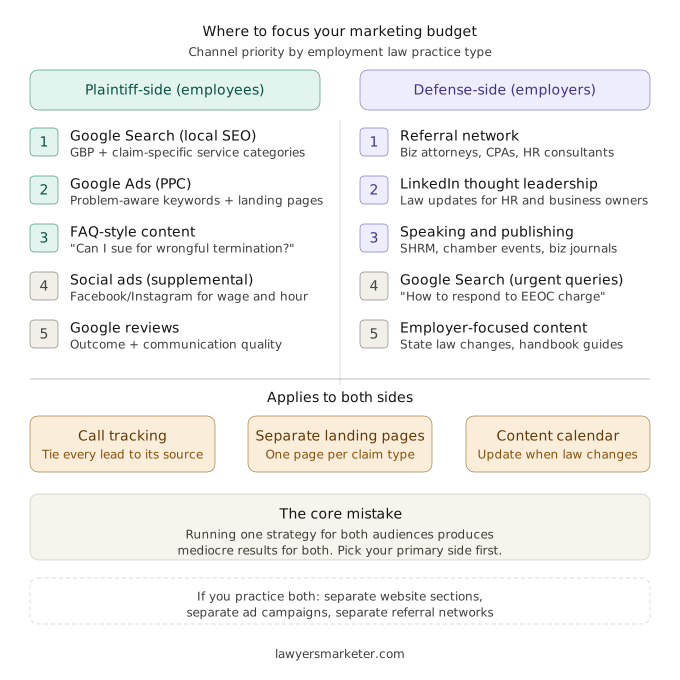
If you practice both plaintiff and defense employment law, your website needs to clearly separate the two audiences, ideally with dedicated pages or even dedicated sections. Someone who just got fired should not have to read through employer-side content to find out if you can help them. And an HR director researching defense counsel should not wonder if you also represent employees suing companies like theirs.
This is a conversion problem as much as it is a branding problem. Clarity about who you serve converts better than trying to sound comprehensive to everyone.
Reviews Still Matter
On both sides of employment law, reviews matter, though what clients write about matters differently. Plaintiff-side clients leave reviews about how you communicated, whether you fought for them, and whether the outcome was fair. Defense-side clients are less likely to leave public reviews, but when they do, what they say about your responsiveness, practical advice, and cost efficiency carries weight.
Actively asking satisfied clients for Google reviews is a basic tactic that many employment attorneys skip because the cases feel too personal. Get over that hesitation. Reviews are one of the biggest drivers of organic local search visibility, as we cover in our law firm SEO services section.
Content Marketing Has a Long Half-Life in Employment Law
Employment law changes. New state laws get passed. Federal agency positions shift. Court decisions alter the landscape. This is actually a significant content marketing advantage if you use it.
An employment attorney who publishes timely, practical content about employment law changes in their state will accumulate search traffic and referral credibility over time in a way that most practice areas can’t match. A personal injury attorney’s content about car accidents doesn’t change much. An employment attorney’s content about leave law requirements or non-compete enforceability can be refreshed and redistributed every time the law changes.
Build a content calendar around state and federal employment law updates. Publish practical guides for both employer and employee audiences. This is one of the highest-ROI content investments available in the practice area.
Attribution Matters More Than You Think
Whether you’re plaintiff-side, defense-side, or both, knowing where your cases come from is non-negotiable if you want to grow intentionally. Set up call tracking on your website so phone inquiries are tied to the source. Track form fills by channel. Know whether your cases are coming from Google organic, paid search, referrals, or LinkedIn.
Without that data, you’re making marketing decisions based on gut feel in a practice area where the gap between good and bad marketing decisions is significant. Our law firm marketing services page covers the attribution infrastructure we build for attorney clients.
How to Get Employment Law Clients: A Practical Checklist
Plaintiff-side firms:
- Audit your Google Business Profile and confirm your service categories are claim-specific (wrongful termination, discrimination, wage and hour), not just “employment law”
- Build dedicated landing pages for your top two or three claim types, each with a specific call to action and contingency fee explanation
- Run a Google Ads campaign targeting problem-aware keywords with call tracking in place from day one
- Make sure your intake process can reach back out to a new lead within the hour during business hours
- Publish FAQ-style content targeting the questions your clients ask during consultations (“Do I need a lawyer to file an EEOC charge?” “How long do I have to sue for wrongful termination?”)
Defense-side firms:
- Build or expand your LinkedIn presence with consistent thought leadership content targeting HR professionals and business owners
- Identify five to ten referral relationships worth developing (business attorneys, CPAs, HR consultants) and build a systematic way to stay in front of them
- Create a dedicated employer-side section of your website, or consider a standalone employer defense landing page
- Write one piece of substantive content per month on a current employment law issue affecting employers in your state
- Speak at one local business or HR event per quarter
Firms doing both:
- Separate your website content and messaging by audience, clearly
- Run separate Google Ads campaigns with different ad copy and landing pages for each side
- Decide on your primary referral audience and build that network first before trying to build two networks simultaneously
Parting Thoughts on Employment Law Marketing
Employment law marketing is not that different from other legal practice areas at a structural level. You need visibility, credibility, and a pipeline that converts. What makes it different is the audience split.
Most employment attorneys either specialize in one side or handle both, and either way, treating the marketing as a single unified effort produces mediocre results. Plaintiff-side clients find you through search and emotional triggers. Defense-side clients find you through referrals, LinkedIn, and demonstrated expertise. The keywords are different. The channels are different. The messaging is different.
Get the audience right first, then build the marketing strategy around it.
If you want help thinking through what that looks like for your specific firm, our law firm marketing services page is a good starting point, or you can reach out directly to talk through where your current strategy has gaps.
Looking for more on law firm marketing by practice area? Check out our guides on personal injury attorney marketing and family law marketing for the same level of detail applied to other practice areas.