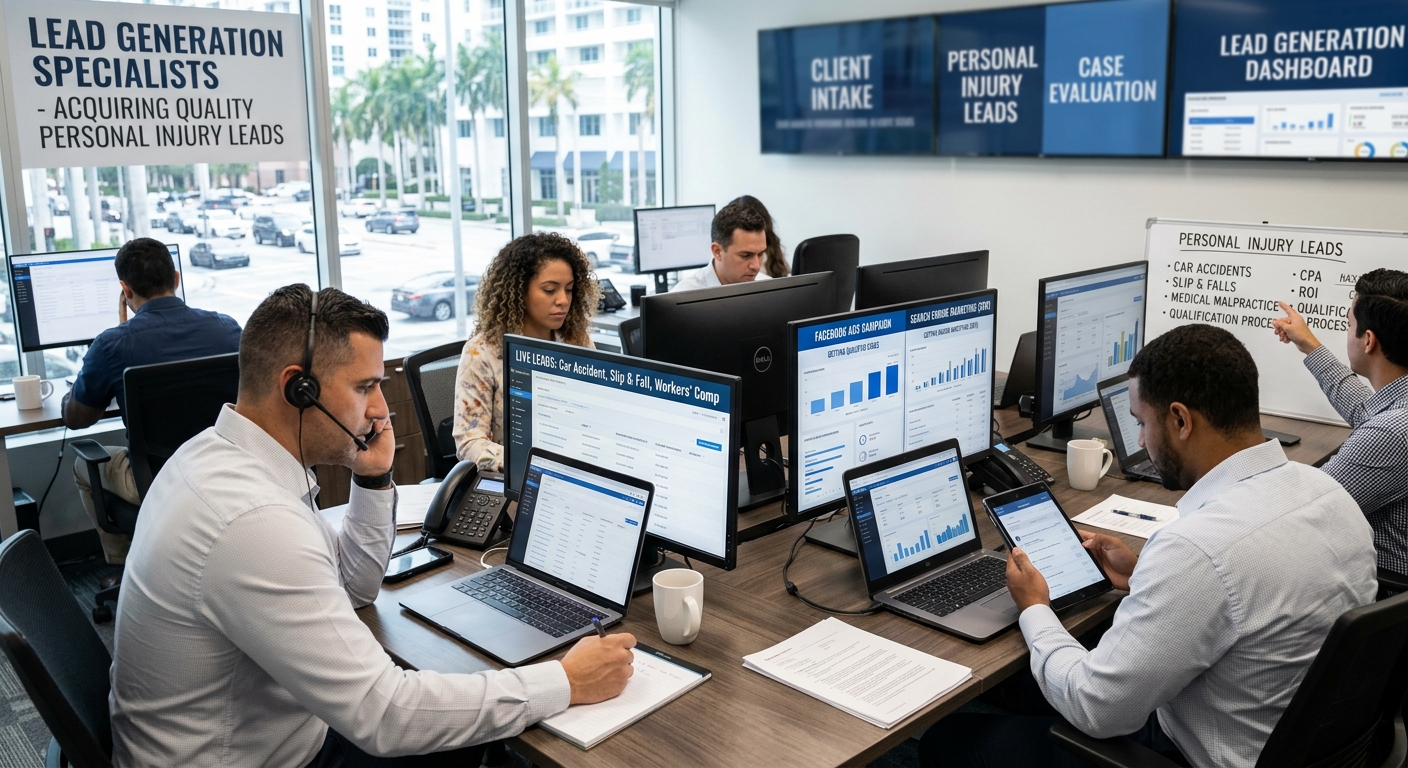

- Bought personal injury leads have a place, but only as a bridge while you build channels you own, because the price per signed case climbs every year and you have no control over it.
- Shared leads sold to four firms convert at a fraction of exclusive leads, and once you divide the price by the sign rate, the “cheap” shared lead is usually the expensive one.
- Speed to first call is the single biggest variable in PI intake, and firms that call back inside five minutes sign dramatically more of the same leads their competitors are buying.
- The contract terms that hurt most are auto renewal, no refund policy on duplicate or out of area leads, and any clause where the vendor owns the phone number, the website, or the domain.
Run the arithmetic before you run the campaign. A firm paying $340 a lead and signing one in eighteen is spending about $6,100 in lead cost per signed case, before a dollar of staff time. That firm will tell you it has a lead quality problem. Nine times out of ten it has a call back problem, and a contract problem, and only then a lead quality problem.
That’s the pattern. Bought leads are rarely as bad as firms say, and almost never as good as vendors say. Here’s the math, honestly, so you can decide where your next $10,000 goes.
What a signed case actually costs through each route
Start by ignoring cost per lead. It’s the number vendors sell on and the number that tells you the least. The only figure that matters is cost per signed case, which is cost per lead divided by your sign rate.
Shared leads. Sold to three to five firms at once. Price runs roughly $150 to $400 depending on case type and market. Sign rates land somewhere around 3% to 6% for most firms. Do the division and you’re at $3,000 to $12,000 per signed case, with the wide end explained almost entirely by how fast you call.
Exclusive leads. Sold to you alone. Price runs roughly $400 to $1,200 for auto cases, higher for anything involving a trucking or premises claim. Sign rates are usually two to four times a shared lead, often 12% to 25%. That lands you in a similar or better range per signed case, with far less wasted staff time chasing people who already hired someone.
Pay per case. You pay only for a signed, screened case. Pricing is typically [ADD: current pay per case range for auto in your market], and it’s the lowest risk structure on paper. The catch is case quality selection. You’re getting what the vendor couldn’t place elsewhere, or paying enough that the economics only work on larger cases.
Google Local Service Ads. Pay per lead, but the lead comes from someone searching for a lawyer right now rather than filling out a form on a content site. Expect $250 to $600 per lead in competitive metros. Sign rates run higher than shared leads because intent is higher. More on the mechanics in our guide to Local Service Ads for lawyers.
Leads you generate yourself. SEO and paid search on your own site. Higher upfront cost, no cost per lead, and the asset keeps producing after you stop paying. A firm spending $5,000 a month on personal injury SEO that produces twelve signed cases a month in year two is at roughly $420 per case, which no vendor will ever beat. Getting to year two is the hard part.
Shared versus exclusive, settled
Buy exclusive. I know shared looks cheaper per lead. It isn’t cheaper per case for most firms, and the hidden cost is your intake staff burning forty hours a month on people who signed with someone else three hours ago.
There’s one exception. If your intake operation is genuinely elite, meaning you’re calling inside two minutes on every lead, seven days a week, with a real follow up sequence running behind it, shared leads can work, because you’re winning the race the other four firms are losing. If that describes your firm, you already know it. If you’re not sure, it doesn’t describe your firm.
Speed to first call decides everything
Every other variable in personal injury lead generation is downstream of this one. A shared lead is a race, and the winner is usually just whoever dialed first.
What that means operationally:
Get the lead into a dialer automatically, not into an inbox. Lawmatics, Clio Grow, or a Make.com connection between your lead source and your CRM will do it. Manual copy and paste costs you the case.
Call within five minutes, then call again. Most firms make one attempt. Six to eight attempts across the first forty eight hours, mixing calls and texts, roughly doubles contact rates over a single try. Text is underused in PI and it works, because your prospect is often in an ER or a body shop and can’t take a call.
Cover nights and weekends. A meaningful share of accident leads arrive outside business hours, and that’s when the field thins out. Smith.ai or a similar live service runs $300 to $1,000 a month. Compare that to the price of one bought lead you never reached.
If you don’t know your current speed to first call, that’s the number to go find this week. Our law firm intake analysis exists because most firms are wrong about theirs by a factor of ten.
The contract terms that burn firms
Auto renewal with a narrow cancellation window. Twelve month terms that renew unless you cancel in a thirty day window nobody calendars. Ask for month to month, or negotiate the window to ninety days.
No refund or credit for bad leads. Duplicates, wrong state, wrong practice area, disconnected numbers, people who already have counsel. Get a written credit policy with a defined dispute window before you sign, and then actually file the disputes. Most firms don’t, which is exactly why the policy is offered.
Volume minimums you have to pay whether or not you take the leads. Fine if your intake capacity is real. A trap if you’re a three person firm.
Vendor owned assets. This is the worst one. Some personal injury lead generation companies bundle a website, a domain, or a tracking number into the deal. Leave, and you lose all three, along with your rankings and every printed card with that number on it. Before signing anything, confirm in writing that you own the domain, the site files, and the phone numbers.
Territory and exclusivity language that doesn’t define the territory. “Exclusive in your market” means nothing until the contract names counties or ZIP codes.
Where I’d put the money
Bought leads are a bridge, not a plan. Use them to fill capacity now while you build the channels nobody can turn off. Concretely, if you’ve got $10,000 a month for case acquisition, I’d run roughly $4,000 into exclusive leads or LSAs for immediate volume and put $6,000 into SEO, your Google Business Profile, and content that targets how injured people actually search. Shift that ratio toward the owned side every quarter as organic starts producing.
The firms that get stuck are the ones still at 100% bought leads in year four, watching cost per case rise 15% a year with no way to push back on it. Pick your keyword targets from what actually converts, which we cover in personal injury keywords, and if you handle commercial vehicle work there’s specific advice in how to find more trucking accident cases.
Get a second opinion on your numbers
If you’re buying personal injury leads and you can’t state your cost per signed case from memory, that’s the place to start. Send us what you’re spending and what you’re signing, and we’ll tell you whether the problem is the source, the intake, or the contract. Reach out here, or look at how The Lawyers’ Marketer handles personal injury lawyer marketing first.