
TL;DR
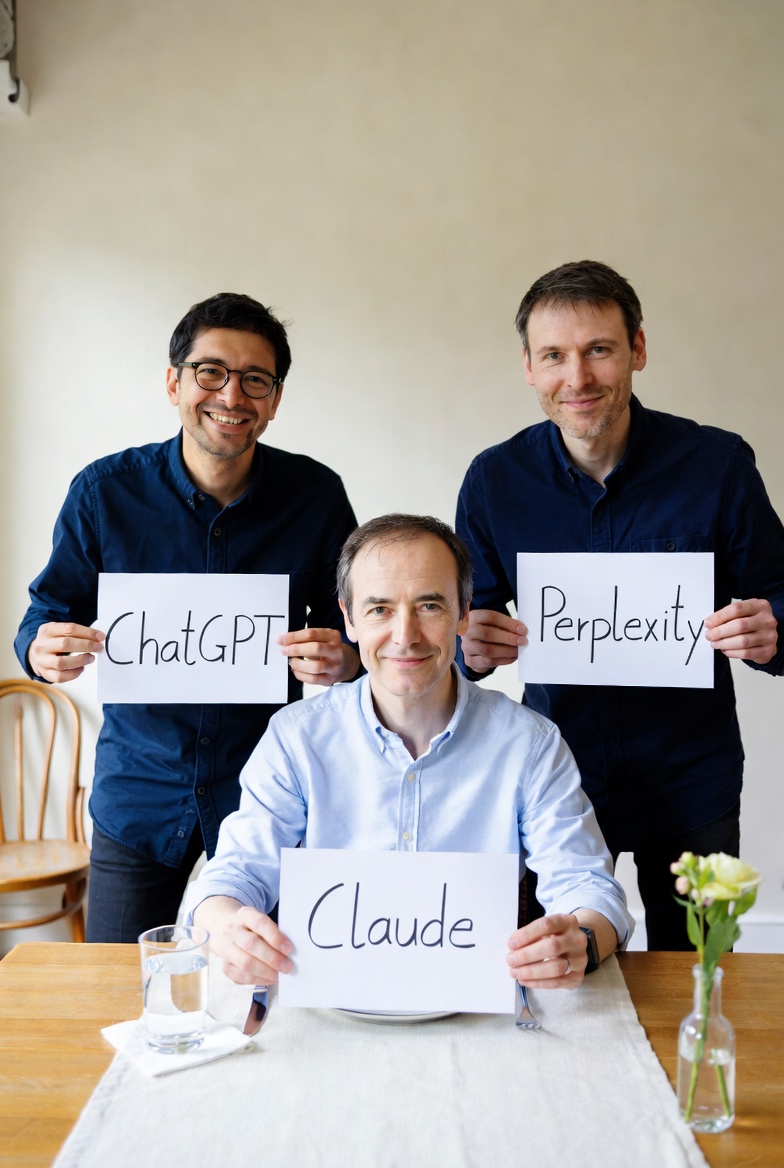
- ChatGPT is the most versatile and the most popular, with the deepest plugin ecosystem and the strongest creative range. It’s the best default if your firm is picking one tool.
- Claude is the safest pick for legal work that involves long documents, contract review, and any task where hallucinations would embarrass you in front of a judge.
- Perplexity is not a chatbot, it’s a research engine with citations baked in. Use it when you need a fast answer with sources you can verify.
- The smart play in 2026 isn’t picking one. It’s using all three for what each does best, and writing down which tool gets which job.
- None of them are a substitute for attorney judgment. Every output gets reviewed before it leaves your firm.
I get asked this question almost every week. Some version of “I keep hearing about ChatGPT and Claude and Perplexity, which one should we actually use at the firm?” They’re not really competitors in the way most people assume. They overlap, but each one is built for a different job, and the firms that are getting real value out of AI right now are the ones that figured that out.
Here’s the practitioner’s read on all three, from someone who has watched law firms try to standardize on one tool, fail, and then quietly start using all three anyway.
ChatGPT: The Generalist
ChatGPT is the most familiar of the three. It’s the tool your associates have been using since law school, the one your spouse uses to plan dinner menus, and the one your kids use to write essays you have to pretend not to know about.
For a law firm, ChatGPT is genuinely useful at:
- Drafting first passes of marketing content, emails, and client communications
- Brainstorming arguments, counterarguments, and case theories
- Summarizing meetings, depositions, or transcripts you upload
- Translating legal concepts into plain language for clients
- Building intake scripts, FAQs, and practice area pages
The plugin ecosystem and integrations are the biggest practical advantage. ChatGPT connects to more third-party tools than the other two combined, which matters if your firm runs on Microsoft, Google Workspace, or any of the major practice management platforms.
The downside is hallucination risk. ChatGPT is the tool most often cited in the news stories about lawyers getting sanctioned for filing briefs that quoted fake cases. The model has gotten better, but the underlying risk is still there. If you use ChatGPT for legal research or any output that has to be factually airtight, you have to verify every citation against an actual case database. No exceptions.
ChatGPT Plus runs $20 a month. Team plans run $25 to $30 per user. Enterprise pricing is custom.
Where it wins: Speed, range, plugin ecosystem, familiarity. Where it loses: Anything where accuracy and document analysis matter more than creativity.
Claude: The Careful One
Claude is the tool I keep recommending to law firms for the work that actually has to be right. We wrote a full practical guide to Claude AI for lawyers earlier this year, so I won’t repeat all of it here, but the short version is that Claude is built differently than ChatGPT.
Anthropic, the company behind Claude, put accuracy and transparency at the center of how the model behaves. When Claude doesn’t know something, it’s much more likely to say so. When it analyzes a long document, it tends to stay grounded in what’s actually in the document instead of inventing facts to fill gaps. That’s the single most important property for a legal user.
Claude is the better pick for:
- Contract review and analysis
- Long document summarization (Claude’s context window comfortably handles full case files and briefs)
- Anything privileged or confidential where accuracy is non-negotiable
- Drafting briefs, motions, and demand letters that need a careful tone
- Writing marketing content with a human voice (the model has a stronger feel for natural writing than ChatGPT, which tends toward corporate stock prose)
Claude Pro is $20 a month. Claude Max runs $100 to $200 a month depending on usage. The Max plan is genuinely worth it for any attorney who is going to lean on the tool for daily work.
The tradeoff is fewer integrations. Claude doesn’t plug into as many third-party tools as ChatGPT, and the ecosystem around it is smaller. If your firm needs deep workflow automation, you’ll probably end up using Claude through Claude Code, Claude Cowork, or the API rather than the consumer app.
Where it wins: Accuracy, document analysis, long-context work, writing quality. Where it loses: Creative range, plugin ecosystem, real-time web data.
Perplexity: The Researcher
Perplexity is a different category. It’s not a chatbot in the way ChatGPT and Claude are. It’s an AI-powered research engine that always cites its sources, and that single design choice changes everything about how lawyers should think about it.
When you ask Perplexity a question, you get an answer with numbered footnotes that link to the actual source pages. You can click through, read the original, and verify. That workflow is much closer to how attorneys already work than either ChatGPT or Claude.
Perplexity is strongest at:
- Fact-checking and source verification
- Researching opposing counsel, opposing parties, expert witnesses, and judges
- Background research on new practice areas, jurisdictions, or industries
- Competitive research on other law firms in your market
- Tracking down statutes, regulations, and news coverage on a specific topic
It’s not the right tool for drafting long documents, analyzing contracts, or anything that needs creative output. It’s a research tool, and it’s the best AI research tool currently on the market for that specific use case.
Perplexity Pro is $20 a month. There’s also a free tier that’s usable for occasional research.
The catch: Perplexity is only as good as the sources it pulls from. For legal research specifically, it still doesn’t have access to Westlaw, Lexis, or the deep case law databases. Use it for general research and source verification, not for primary legal research.
Where it wins: Citations, source transparency, research workflows. Where it loses: Drafting, document analysis, anything creative or long-form.
Side-by-Side: When to Use ChatGPT vs. Claude vs. Perplexity For Law Firms
Here’s the cheat sheet I give clients:
| If you need to… | Use |
|---|---|
| Brainstorm ideas, draft marketing copy, run intake scripts | ChatGPT |
| Review a contract, summarize a deposition, draft a brief | Claude |
| Verify a fact, research opposing counsel, find sources | Perplexity |
| Translate legal jargon for a client letter | Claude or ChatGPT |
| Build an FAQ page or practice area page | Claude |
| Run social media drafts and rough video scripts | ChatGPT |
| Find every news article about a case or a person | Perplexity |
| Analyze a 200-page document | Claude |
The pattern is the same across most firms I work with. ChatGPT for breadth and creativity. Claude for depth and accuracy. Perplexity for research with sources.
The Ethics Layer Nobody Wants to Talk About
All three tools sit in the same uncomfortable spot when it comes to confidentiality. Model Rule 1.6 obligates you to take reasonable steps to protect client information. Every state bar that has weighed in so far has said roughly the same thing: you can use AI in your practice, but you need to understand exactly how the tool handles your data, you need to disclose AI use in some cases, and you can’t just paste privileged information into a public chatbot without thinking about it.
Practical guardrails for any of these tools:
- Use paid plans, not free plans. Paid plans have stronger data handling commitments.
- Read the data retention and training policies. Anthropic, OpenAI, and Perplexity all have public terms. Read them at least once a year because they change.
- Set a written firm policy on what staff can and cannot put into AI tools. Most leaks at firms happen because the leadership didn’t know what the paralegals were already doing.
- Use enterprise or business tiers where possible. The data handling on enterprise plans is stronger than consumer plans.
- Anonymize client information before pasting documents into any tool unless you’re using an explicitly privileged-safe deployment.
This isn’t optional. It’s part of practicing law in 2026. We covered the broader picture in our complete guide to legal AI, which is worth bookmarking if you’re putting together a firm-wide AI policy.
What This Means For Your Marketing
The other angle on this question, and the one most attorneys forget, is that these three tools are also where your potential clients are finding lawyers now.
When somebody asks ChatGPT “who’s a good personal injury attorney in Tampa,” or asks Perplexity “what should I do after a slip and fall,” or asks Claude to summarize the best family law firms in their city, your firm either shows up in the answer or it doesn’t.
This is what people are calling Generative Engine Optimization, or GEO. It’s the same idea as traditional SEO, but the destination is an AI answer instead of a Google search results page. The fundamentals overlap heavily. Strong on-page content, authoritative backlinks, complete directory listings, and consistent NAP data all feed into both Google and the AI tools.
If you’re already doing real SEO for law firms and building credible backlinks, you’re most of the way to ranking in AI answers. If you’re not, the gap will only get wider as more of your potential clients shift their initial research into ChatGPT and Perplexity.
My Recommendation
If your firm is just starting with AI and you can only pick one tool, pick Claude. The accuracy advantage matters more for legal work than the plugin ecosystem matters, and the writing quality is better for client-facing content.
If you can pick two, add ChatGPT for the creative range and the integrations.
If you can pick three, add Perplexity for research and source verification.
If you can pick zero because your bar association makes you nervous, at least put a written policy in place so your staff has clear rules about what they can and can’t do when they inevitably try a free version on their own.
The firms that are winning with AI right now aren’t the ones with the most expensive tools. They’re the ones that figured out which tool does which job, wrote it down, trained their team on it, and built it into how the firm actually works.
That’s the whole playbook.
Talk To Us About ChatGPT vs. Claude vs. Perplexity
We help law firms figure out how to use AI for marketing, intake, and operations without tripping over the ethics rules or wasting money on tools that don’t fit the work. If you want a real conversation about where your firm stands and what would actually move the needle, get in touch.