
TL;DR
- Estate planning clients take longer to convert than almost any other legal matter, which means your marketing has to work on a longer timeline too.
- Referrals are still the backbone of most estate planning practices, but digital is where people go to vet the referral they just received.
- Your website content needs to speak to 55-year-olds who are researching, not 30-year-olds who are ready to buy.
- Google Reviews carry more weight in estate planning than in almost any other practice area. This article explains why and what to do about it.
- This guide covers estate planning marketing from strategy through execution, including what most law firm marketing agencies get wrong about this practice area.
Why Estate Planning Marketing Is Different from Everything Else
Most legal marketing advice is written with personal injury or criminal defense in mind. Someone has a problem, they need a lawyer now, they search Google, they call the first firm with good reviews and a clear phone number.
Estate planning doesn’t work that way.
The average person who needs an estate plan has been meaning to get one done for three to five years. They’re not in a crisis. There’s no deadline. Something finally pushes them to act: a parent dies, a colleague has a health scare, their financial advisor brings it up for the fourth time. And then, before they pick up the phone, they ask around.
That’s the defining characteristic of estate planning marketing: the referral precedes the search. Someone’s brother-in-law recommends you, and then the prospective client goes to Google to confirm you’re legit. Or their CPA mentions your name, and that night they look you up on their iPad.
This is a fundamentally different marketing dynamic, and it calls for a different strategy.
If you’re treating your estate planning practice like a personal injury firm and dumping your whole budget into Google Ads, you’re probably frustrated by your cost per lead. If you’re ignoring digital entirely and relying on referral relationships, you’re leaving conversion on the table because people who don’t like what they find when they Google you are quietly moving on to someone else.
The goal is to get both sides working together. That’s what this guide covers.
The Referral-Digital Balance: How Estate Planning Clients Actually Find You
Let’s be direct about something the marketing industry doesn’t like to say: for estate planning attorneys, referrals will almost certainly remain your primary lead source. That’s not a problem. That’s a feature of the practice area.
People are asking you to help them think about dying. That’s not a Google search impulse purchase. It requires trust, and trust most often comes through a warm introduction. Financial advisors, CPAs, insurance agents, and other attorneys are your best referral sources. So are past clients whose parents you helped, and then whose adult children come back years later.
But here’s what changed in the last decade: referrals no longer convert automatically.
When someone gets your name from their CPA, the first thing they do is Google you. If they find a thin website, no reviews, and a profile that looks like you haven’t touched it since 2018, a meaningful percentage of them will keep looking. They don’t call to verify. They just move on.
Your digital presence is no longer an alternative to referrals. It’s the thing that turns a referral into a consultation.
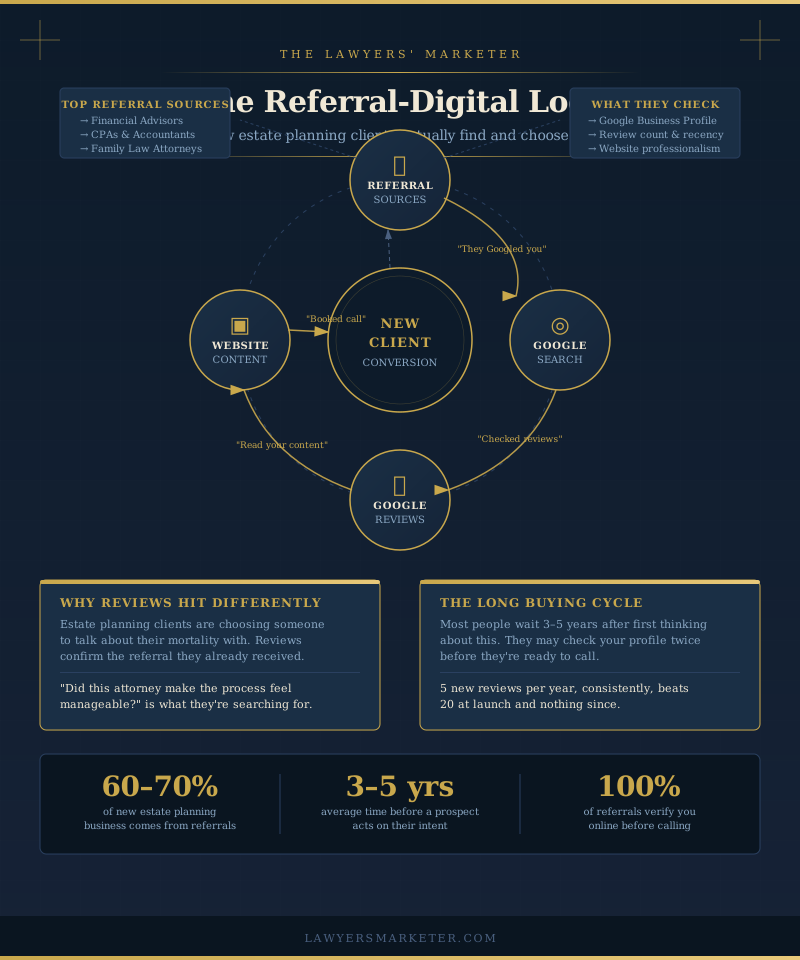
What the Referral Validates and What Digital Has to Confirm
When a referral source recommends you, they’re typically vouching for your competence and reliability. What the prospective client still wants to confirm on their own:
That you’re still active and accessible.
A website that looks abandoned signals that you might be semi-retired, even if you’re not.
That other clients have had good experiences.
This is where Google Reviews become critical, which we’ll cover in detail below.
That you actually specialize in what they need.
If someone needs a trust for a blended family situation and your website only mentions “wills and trusts” in passing, they might wonder if you handle that kind of complexity.
That you seem like someone they can talk to.
Estate planning clients are choosing someone they’re going to have a real conversation with about their family, their assets, and what happens when they die. The tone and presentation of your online presence matters more here than in most practice areas.
Understanding Your Audience: Marketing to the 50s and 60s Demographic
Most estate planning clients are in their 50s and 60s. Some are younger (a new baby or a real estate purchase will push 30-somethings to finally do it), but the core demographic is solidly in that pre-retirement and early-retirement window.
This matters for how you structure your marketing, because this demographic has specific behaviors online that are different from younger searchers.
They Read More Than They Watch
Video content matters, and you should have some, but written content still drives the research process for this age group more than it does for millennials. They’re comfortable reading long-form material. They’re not going to skim your blog post and bail after 200 words the way a 25-year-old might. If you write a thorough, substantive article about the difference between a revocable living trust and a will, a 58-year-old researching their options will read the whole thing.
This means long-form content is worth your investment. Don’t write 400-word blog posts that say nothing. Write 1,500-word articles that actually answer questions.
They Search Differently
A 35-year-old might type “estate planning attorney near me” into their phone. A 60-year-old is more likely to type something like “do I need a trust or is a will enough” or “what happens to my house when I die without a will.” They search in full sentences and questions. They want real answers, not just a name and phone number.
This has direct implications for your content strategy. You need to be answering the questions they’re actually asking, not just optimizing for short-tail keywords that don’t reflect how this audience searches.
They Use Fewer Platforms
Facebook is still relevant for this demographic. Instagram less so. TikTok almost not at all for estate planning purposes. LinkedIn matters if you’re targeting business owners with estate planning needs. Google is where they search. Email is where they’re reachable once they’ve opted in.
Don’t spread yourself thin trying to be everywhere. Be thorough where your clients actually are.
Desktop Over Mobile (More Than Other Demographics)
Mobile-first is the right default for most legal marketing now, but this demographic still uses desktop computers at a higher rate than younger audiences. Your site needs to work beautifully on mobile because Google ranks based on mobile experience, but don’t neglect the desktop experience. If your site looks great on an iPhone and strange on a laptop, you’re losing people.
They Trust Credentials and Tenure More Than Personality
Younger audiences respond well to an attorney who seems relatable and approachable on social media. Your estate planning prospects want to know you’ve been doing this for 15 years and that you’re a member of the estate planning council. Credentials, tenure, recognitions, and affiliations carry more weight here than a casual and personal social media presence.
Put your credentials front and center on your website. Don’t bury your years of experience at the bottom of your bio.
Why Google Reviews Are Disproportionately Important for Estate Planning
In almost every practice area, Google Reviews are important. In estate planning, they’re critical in a specific way that’s worth explaining.
The Intimacy Factor
Estate planning clients are choosing someone to help them navigate questions about mortality, family dynamics, and wealth transfer. These are among the most personal decisions a person makes. Reviews carry extraordinary weight because the prospective client is reading them and asking: “Would I want to be in a room with this person talking about my death?”
A personal injury client is primarily choosing an attorney on the basis of win rate and fees. An estate planning client is choosing a relationship. Reviews that speak to how the attorney made someone feel, how clearly they explained things, and how patient they were with questions will convert readers into callers at a much higher rate than reviews that just say “great lawyer.”
The Referral Confirmation Function
As mentioned earlier, most estate planning clients come to your Google profile after receiving a referral. In this context, reviews serve as independent validation of the referral they already received. They’re not using reviews to find you. They’re using reviews to confirm you’re who they were told you were.
A strong review profile with 40 or 50 detailed five-star reviews will confirm the referral and close the loop. A thin profile with five reviews, two of which are from 2019, will introduce doubt.
The Long Buying Cycle Effect
Because estate planning clients take months or years to move from “I should do this” to “I’m booking a consultation,” they often check your profile multiple times. Someone might look you up after receiving a referral, then look you up again six months later when they’re finally ready to call. If your review count has grown in that window, that’s social proof that you’re active and that clients keep choosing you.
This means getting a steady stream of new reviews over time matters more than a single burst. Five new reviews a year, consistently, is better than 20 reviews at launch and nothing since.
How to Get More Reviews from Estate Planning Clients
This practice area has a specific challenge: estate planning is not something clients brag about. Nobody is posting on Facebook about their new revocable trust. There’s no natural trigger for a client to leave a review the way there is for a restaurant or a plumber.
You have to ask, and you have to make it easy.
The best time to ask is immediately after the signing meeting. The client has just completed a major task they’ve been putting off, and there’s a real sense of relief and accomplishment. That’s the moment. Have your staff follow up within 24 hours with a simple email that thanks them for being a client and includes a direct link to leave a Google review.
The email should be short, warm, and not automated-sounding. Something like:
“Thank you again for coming in yesterday. We genuinely appreciate clients who take the time to get this done. If you have a minute and your experience was positive, a Google review makes a real difference for us. Here’s a direct link: [link].”
Do not overthink this. The ask itself works if the client had a good experience.
Content Marketing for Estate Planning: What to Write and Why
Content marketing for estate planning works, but it works slowly. This is a practice area where content builds authority over 12 to 18 months, not 90 days. If you’re expecting a blog post to produce calls next week, you’ll be disappointed. If you’re building a library of useful content that compound over time, content is one of the highest-return investments you can make.
The Questions Worth Answering
Your content strategy should be built around the questions your clients actually have, not the keywords a tool tells you to target. Those often overlap, but start with the questions.
Here are the questions that estate planning clients in the 50s-60s demographic are most commonly researching:
What’s the difference between a will and a trust, and which do I need? This is the most common foundational question. Write it thoroughly. Not 500 words. A full guide.
What happens to my house (or business, or investment account) if I die without a will in [state]? These are local-intent questions with real urgency. Write one for your state.
How much does estate planning cost? People search this constantly and most attorney websites refuse to answer it. If you publish a transparent, honest article about how pricing works, it will rank and convert.
Do I need to update my estate plan after [trigger event]? Divorce, new child, death of a spouse, selling a business, moving to a different state. These are all triggers that bring people back into the market. Write individual pieces for each trigger.
What is a power of attorney and do I need one? People often don’t understand that estate planning includes more than what happens after death. This is a good awareness piece.
How do I set up a trust for my minor children? Parents in their 30s and 40s are a secondary audience. Capture them too.
The Format That Works for This Audience
Long-form, well-organized articles work. Use clear subheadings so readers can scan and find what they want. Use plain language. Avoid jargon or explain it immediately when you use it.
Do not write in a way that shows off your legal knowledge at the expense of clarity. Your clients are intelligent but not lawyers. Write for an intelligent non-lawyer.
Include a clear call to action at the end of every article. Don’t assume the reader will figure out how to contact you. Tell them explicitly: “If you have questions about your specific situation, we offer a no-obligation initial consultation. Call us at [number] or complete the form below.”
How Often to Publish
Once or twice a month is enough if the content is genuinely useful. Publishing thin 400-word posts every week because someone told you consistency matters is worse than publishing one thorough article per month. Quality beats volume in this practice area, and in this age demographic.
Local SEO for Estate Planning Attorneys
Most estate planning clients want someone local. This isn’t a practice area where someone in Florida is looking for an attorney in Washington. Local SEO is foundational.
Your Google Business Profile
Your Google Business Profile is the first thing many prospects see, especially after receiving a referral and searching your name. Keep it complete and current.
Make sure your category is set correctly. “Estate planning attorney” or “probate attorney” should be included. Your description should clearly state what you do and where you serve. Upload real photos of your office and team. Answer every question that gets asked in the Q&A section.
Post to your profile at least once a month. A short post about a relevant topic (what to do when a parent dies, common mistakes people make without a will) signals that you’re active and engaged. It also gives the algorithm something to work with.
Location Pages
If you serve multiple counties or cities, create individual pages for each location. “Estate planning attorney in [city]” is a real search with local intent. Don’t try to rank a single homepage for 12 cities at once. It doesn’t work that way.
Citations and Directory Listings
Make sure your name, address, and phone number are consistent across all legal directories: Martindale Avvo, FindLaw, Justia, and the state bar directory. Inconsistencies confuse both Google and prospective clients.
Referral Source Development: The Overlooked Half of Estate Planning Marketing
Digital is essential, but it would be a mistake to treat it as a replacement for referral development. For most estate planning practices, 60 to 70 percent of new business will still come through referrals for the foreseeable future. The marketing strategy that ignores that reality is incomplete.
Who to Build Relationships With
Financial advisors are your single best referral source. They’re already having conversations about retirement planning, wealth transfer, and insurance. Estate planning comes up constantly, and most advisors either have a preferred attorney they send clients to or don’t have one at all. If you can become the go-to estate planning attorney for a financial advisory practice with 200 clients, that relationship is worth more than any advertising campaign.
CPAs are your second-best source. Estate planning intersects with tax planning in ways that make CPAs natural connectors.
Insurance professionals, particularly life insurance agents, are often undervalued as referral sources. A client who just purchased a large life insurance policy should have their estate plan reviewed.
Other attorneys, particularly family law attorneys, are excellent sources. Divorce triggers estate plan updates. Family law attorneys see clients who urgently need to revise their documents, and if you have a relationship with those attorneys, you’ll get calls.
How to Build and Maintain Referral Relationships
The classic approach still works: meet them, add value, stay in touch.
Meet them through professional associations (estate planning councils, local bar, financial planning associations) and community involvement. Add value by being someone they can call with a quick question, by sharing information that’s useful to their practice, and by making referrals back when it makes sense. Stay in touch through occasional lunch or coffee meetings, a periodic email, or a short newsletter.
A quarterly email to your referral sources with one practical piece of information relevant to their practice will keep you top of mind without being intrusive. Not a sales email. Not a newsletter about your firm. Something genuinely useful to a CPA or financial advisor.
Paid Advertising for Estate Planning: Worth It or Not?
Paid search is complicated for estate planning because the economics are different from practice areas with high-urgency, high-fee cases.
The typical estate plan generates $2,000 to $5,000 in fees for a basic package. A comprehensive trust plan might be $7,500 or more. Google Ads for estate planning keywords can run $15 to $40 per click in competitive markets. If you’re converting at 3 percent of clicks to consultation, and closing at 40 percent of consultations, your cost per new client can exceed your fee on a basic plan.
That math doesn’t work for every practice, and it doesn’t have to. Paid search is an option, not a requirement.
If you do run ads, target high-intent queries like “estate planning attorney [city]” or “how to set up a trust [city]” rather than broad informational terms. Use a dedicated landing page, not your homepage. Make the offer clear: a free consultation, a fixed-fee quote, whatever gets people to take action.
Facebook advertising can work for estate planning at a lower cost per click than Google, particularly when you target by age and life events (recent home purchase, approaching retirement age). It takes more testing to get right, but the economics can be favorable.
For most estate planning practices, I’d prioritize investing in SEO content and Google Business Profile before paid ads. The ROI is better over an 18-month window.
The Estate Planning Client Experience as a Marketing Asset
One thing most marketing guides don’t mention: for a practice area this personal, the client experience during the engagement is part of your marketing strategy. Referrals are generated by clients who had a good experience, not just clients who got a competent result.
Estate planning clients often come in anxious. They’ve been putting this off because it’s uncomfortable. They don’t fully understand the process. Many of them are worried about doing something wrong.
If you or your team can make that process feel calm, clear, and manageable, you will generate referrals at a much higher rate than firms that treat it as a transaction. Clients talk about you when you made them feel like you had all the time in the world for their questions, not when you drafted a trust efficiently.
This isn’t a soft point. It’s a direct driver of the referral volume that makes estate planning marketing work at scale.
Putting It Together: A Marketing Plan for Estate Planning Attorneys
Here’s a simple framework. Not a 47-step checklist. A realistic prioritization.
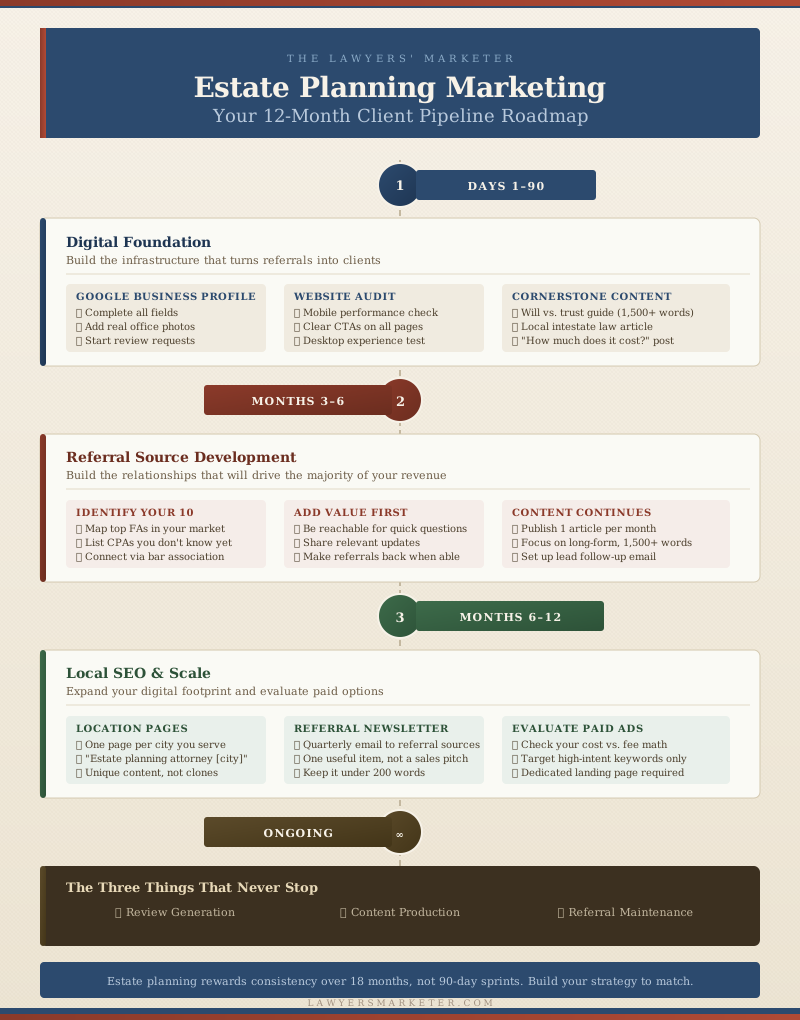
First 90 days:
Get your Google Business Profile fully optimized. Start asking for reviews after every matter closes. Audit your website for mobile performance and clear calls to action. Write two or three cornerstone content pieces (will vs. trust, local intestate law, how much estate planning costs).
Months 3 to 6:
Build out your referral source list. Identify the 10 financial advisors and CPAs in your market you want relationships with and begin the process of connecting. Continue publishing content monthly. Set up a simple email follow-up for leads who don’t book immediately.
Months 6 to 12:
Add location pages if you serve multiple areas. Start a simple quarterly email to referral sources. Evaluate whether paid advertising makes sense given your lead volume and fee structure. Track which content is generating traffic and calls, and write more of what’s working.
Ongoing:
Review generation is never done. Content production is never done. Referral relationship maintenance is never done. The practices that build strong pipelines do these things consistently over years, not in a sprint.
Working with a Law Firm Marketing Agency for Estate Planning
If you’re considering hiring help with your marketing, look for an agency that understands the practice area rather than one that treats every firm like a personal injury mill. The right agency will talk about referral development alongside digital strategy, not just keywords and ad spend.
Questions worth asking any agency you’re considering:
Do you have experience specifically with estate planning practices, or with professional services firms where the buying cycle is long? How do you think about the role of referrals in a law firm marketing strategy? What does success look like at 90 days versus 18 months? How do you handle content for an older demographic?
At The Lawyers’ Marketer, we work with estate planning attorneys who are tired of generic marketing advice that doesn’t account for how this practice area actually works. If you want to talk through your specific situation, reach out for a no-obligation consultation.
Parting Thoughts On Estate Planning Marketing
Estate planning marketing rewards patience and consistency more than almost any other practice area. The firms that build strong pipelines aren’t doing anything exotic. They’re doing the fundamentals well over a long period of time: showing up correctly online, making it easy for referral sources to send clients their way, and converting those clients by making the experience worth talking about.
The firms that struggle with marketing are usually trying to shortcut the timeline or applying strategies built for a different kind of legal work. Estate planning is a long game. Build your marketing strategy to match.
Ready to build a more consistent client pipeline for your estate planning practice? The Lawyers’ Marketer works with attorneys across the country on marketing strategies built around how law firm clients actually make decisions. Contact us to start a conversation.